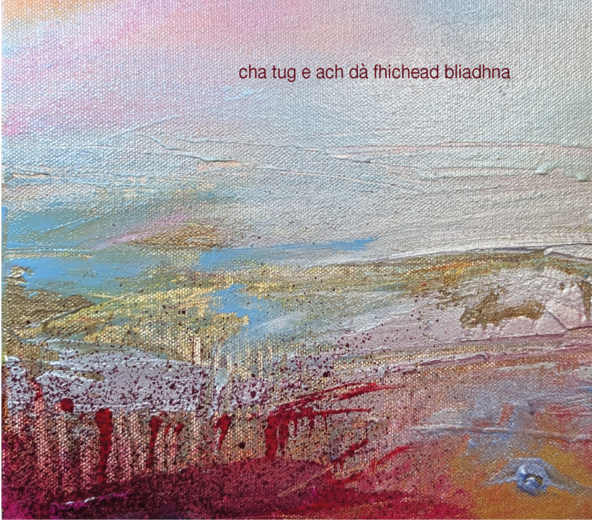
2026, CD empty bird cage records EBR 015 // 7 tracks // 53:01
Musicians Christoph Gallio soprano, alto & C-merlody / Phil Durrant mandolin & electronics Production notes All compositions by Gallio / Durrant // Recorded by Gallio / Durrant on 21st and 22nd May 2024 in Baden, Switzerland at PERCASO Studio // Mixed & mastered by Michael Brändli at Hard Studios in Winterthur // Liner notes by Phil Durrant // Produced by Phil Durrant, Christoph Gallio, Daniel Thmpson // Graphic design by Daniel Thompson // Cover art by Beverley Waller
Samples
Selvaschadetg, ceramica, parzialmein smaltada Selvaschadetg, ceramica, parzialmein smaltada
Betg tut las casas en egalas Betg tut las casas en egalas
Reviews
JAZZWORD, KEN WAXMAN
Despite Brexit, cooperation still exists between the UK and the EU, and this blending of values is very apparent when it comes to improvised music. Take these sessions for instance. While one partner in each duo is British and the other from the continent, their chief attraction is in how both blend singular reed techniques, uncommon string instruments and analogous improvisational tropes.
The Moon men featured are UK baritone saxophonist Simon Rose, who has worked with Ernesto Rodrigues and Michel Doneda among many others and German Nicola Hein, playing 7-string microtonal guitar and electronics and whose associates include Ada Rave and Sebastian Gramss. Expanding other language currents to contemporary times, the titles on Cha tug e ach dà fhichead biadhna were crafted from a mix of Scottish Gallic and Romansh, with the music evolved by Swiss Christoph Gallio on alto, soprano and c-melody saxophones, who has recorded with Gerry Hemingway and Alfred Zimmerlin to name a few, and the UK’s Phil Durrant using electric mandolin and electronics, and another improviser whose connections stretch from John Butcher to Daniel Thompson.
Avoiding the basement pitches but not the aggressive thrust expected of baritone saxophone playing, Rose’s pressurized snores are tempered with blurred flattement and squeaky rumbles throughout Moon’s seven selections. Alternately concentrated or tongue stopped, his interaction with Hein’s shaking flanges, upwards frails and wave form drones harmonize, challenge or are subsumed by the guitarist’s motifs. Sometimes, as on “Earth”, the terrestrial blend consists of bellicose metallic flanges with string clanging and blurred fingering that meet equally pugnacious triple-tongued snorts before settling into a trenchant connection. Elsewhere as on “Revolve” the gyrating motifs are equally pressurized from reed respiration and searing string twangs, although the resulting scrapes, splinters and scrapes include soaring affiliations.
The extended title track is the most electronically affiliated with shrieking mechanized undertones emphasized. Yet altissimo reed yelps and circular breathed flutters unite with fragmented string slides and frails to emphasize informed lightness as well as darkness.
Instrumental variety is more prevalent on the other CD since Gallio can spread his ideas among three saxophones and the resonance from Durant’s mandolin is both unfamiliar and unique. Plus the balanced sequences are less corrosive and slightly more cooperative than those expressed by Rose and Hein. This is elaborated from the beginning since “Selvaschadetg, Ceramica, Parzialmein Smaltada” the first track is also the lengthiest.
Here vibrating string strums and stops mixed with electronic-emphasized timbral wallows and shakes slowly expand at the same time as reed multiphonics encompass empathized smears and tongue stops and inflate to almost bagpipe-like chanter drones. Descending to sucking quacks and yelps, Gallio then connects with Durrant’s finger-picked string clanks and wavering voltage oscillations. Just when it seems reed note bending peeps are unstoppable, the mandolinist’s thick strums make the connection.
This double-teamed tightrope-like movement of contrapuntal aggressive from both musicians alongside cadenced electronic swells and purrs animate the rest of the selections. However here to none of the improvisations are purely opaque. As the two move through the tracks shards of buoyancy and lightness are heard. A piece such as “Bidh Brògan A ‘Coimhead” for instance balances a thinning reed vibrato with dedicated finger picking from Durrant that seesaw to clanging thickness atop echoing electronics before dissolving.
Evolving with parallel expositions that are often as separate as intersected, there is also space for each to develop his own narratives. Durrant’s single note frails and stops or constant strumming can illuminate a narrative as can Gallio’s honks, aviary cries or peeps. The result is that the evolution “Lar-fhìdhlear” for instance is defined both by Gallio moving from triple tonguing to nearly endless Aylerian screams and stops with contrasting finger-tip string vibrations from Durrant.
Politically the UK rejoining Europe may be far off, yet these duo CDs prove that timbres-across-the-channel connections can make for notable improvised music.
SOUNDBLEED (NZ/Aotearoa/Aukland), JOSHUA TAYLOR
OBSERVATIONS FROM THE 3RD AOTEAROA INTERNATIONAL FESTIVAL OF SECRET(E) SOUNDS 2026
A very pointillist, jagged, noisy but dynamic duo of soprano saxophone and solid body electric mandolin. The musical/sonic language somewhat reminds me of 20th century serialism, but with the organic spontaneity and unpredictability of free improvisation. Christoph's multifaceted soprano sax, sings, shrieks, whispers, chatters, pants and honks with generous amounts of leg muting. At one point, Christoph draws out a mute to mellow things out while in a brief respite from the pointy tapestry of noise. The other half of this duo assemblage is Phil's brittle percussive, trebly plucks, smooth glass slide bends and sine tone bell-like pitch modulations via effects pedals. Phil’s playing demonstrates the subtle timbrel nuances and complexities possible with electric/amplified plucked stringed instruments that are otherwise inaudible on acoustic counterparts. Thoroughly amused audience member Franklin commented that the mechanical sounding menagerie was “like I’m having a nightmare that my car is going bad”.
BAD ALCHEMY, RIGOBERT DITTMANN
DURRANT / GALLIO Cha tug e ach dà fhichead bliadhna (Empty Birdcage Records, EBR 015): Aus jahrzehntealter Freundschaft wurde endlich ein klingendes Tête-à-Tête: Phil Durrant (MIMEO, Trio Sowari) an E-Mandoline & Electronics meets Christoph Gallio (Day & Taxi, Stone Is A Rose Is A Stone Is a Stone) an Alto-, Soprano- & C-Melodysax. Mit Titeln im jeweils großväterlichen Gälisch bzw. Rätoromanisch erinnern sie an die keltisch-rätische Nachbarschaft anno Steinschlag. Ihre drahtig plonkende, prickelnde, quäkende Klangwelt dreht mit althergebrachtem Eigensinn, kernigem Hand- und krächzendem Mundwerk der entropischen Tendenz des Sprechens, Klingens, Fühlens, Denkens eine Nase. Glattem Eiapopeia und plumper Beschönigung stellen sie Gänse- und Gießkannenklang entgegen und eine im Schatten bebrütete eigene Schönheit. Elektronischer Flohzirkus, kreuzkrumm gezerrte Saiten und kurios gekürzelte Kakophonie feiern, unverdrossen widerborstig und unkaputtbar, sich selbst. Und alles andere. [BA 132 rbd]
ORYNX-IMPROV'ANDSOUNDS, JEAN-MICHEL SCHOUWBURG
Phil Durrant, connu pour son travail au violon avec John Butcher et John Russell dans les années 80 et 90, a évolué dans de nouvelles formes d’improvisations radicales avec l’électronique, entre autres avec le Trio Sowari et Thomas Lehn / Radu Malfatti. Depuis plusieurs années, il a acquis une mandoline, ainsi qu’une octave mandola, et développé sa musique vers la dimension « pointilliste » de ses jeunes années entre autres avec Pascal Marzan, Emil Karlsen, Daniel Thompson, et un nouveau trio avec John Butcher et Mark Wastell. Le suisse Christoph Gallio est un goûteux saxophoniste adepte des soprano , alto et C-melody et un créateur entêté publiant ses super albums sur son label autoproduit PerCaso Productions depuis de nombreuses années, à la fois improvisateur free et compositeur de talent. Son trio Day and Taxi a tourné partout depuis des décennies. Récemment, Christoph a fait un séjour productif à Londres, dans la communauté d’improvisateurs la plus ouverte du monde dans laquelle les collègues de talent n’hésitent pas à se commettre sans arrière-pensée avec quiconque pour le plaisir de jouer et de découvrir dans les clubs et séries mensuelles de cette énorme agglomération reliée par le plus formidable réseau de transports en commun qu’on puisse rêver.
Il en est résulté un super album free en duo avec Roger Turner « You Can Blackmail Me Later » publié par ezz-thetics 1055. Wow !. On y entend ce qui fait le sel de la terre , la sensibilité d’un activiste sincère , original qui avec son bagage instrumental personnel pousse la créativité instantanée vers le haut , la sensibilité et un regard en coin sur les choses saxophonistiques. Disons que personnellement, je trouve qu’il y a un peu trop de faiseurs qui utilisent ce médium sans le faire vraiment, improvisationnellement parlant. Mais alors ce duo avec Phil Durrant sera une belle surprise : Phil a amplifié sa mandoline et l’a branchée sur un dispositif électronique rappelant de loin le Derek Bailey des débuts quand il était « atrocement bruitiste » . Ceux qui ont écouté Improvisations for Cello and Guitar avec Dave Holland (ECM 1013 1971), un des rares documents enregistrés dans le légendaire Little Theatre Club, vont sans doute comprendre. Le Tony Oxley du début des années 70, s’adonnait aussi à l’électronification des sons acoustiques de la percussion. Voilà pour le point de repère. Ce duo n’est pas un déballage / avalanche de virtuosité (on pense au London Concert de Bailey Parker de 1975 – Incus 16), mais un travail méticuleux dans le dialogue où tout sonne juste, organique, très attachant et rare. Rare, car c’est une affaire compliquée d’interconnecter valablement un instrument à cordes (et lequel : une mandoline !) avec un dispositif électronique qui transforme prolonge, déforme, manipule , extrapole , parasite l’action instrumentale comme si cela coulait de source. Pour rappel, la mandoline a un manche court, une caisse bombée comme un luth et quatre paires de cordes accordées en quintes : sol, ré, la, mi. Originaire de Naples, c’est un des instruments roi du bluegrass. Face à lui, Phil a affaire à un vieux routard du free avec une expérience qui surclasse son solide bagage instrumental et l’engagement physique de son souffle. Ses sons, scories fantomatiques ou expansions métamorphiques de fréquences électrogènes éclosent et frémissent indépendamment des tracés et les motifs volatiles de son souffleur de camarade. Obstiné à poursuivre et persécuter les interrelations de notes et intervalles / commas en insistant chaque instant avec une tension frénésie/ fantaisie, Christoph a sa manière bien à lui et transforme la lingua franca du sax « free » dans un univers personnel. La complicité des deux est irrésistible et tout autant bonhomme. Si vous avez du cœur, une perception émotionnelle, une certaine expérience et un esprit ouvert, il y a là tout un univers peu commun, ludique , savoureux et interloquant sur lequel votre écoute peut divaguer à souhait et avec émerveillement. Fantastique ! Un grand bon point à Empty Birdcage !!